Lenders don't look at one score; they look at the reports behind it. Here’s how to pull your files and conduct a professional, deep analysis to find the errors you can dispute.
In the U.S., Equifax, Experian, and TransUnion track your borrowing and repayment habits. They get updates from banks, lenders, and collection agencies. However, not every lender reports to all three bureaus, and they don’t report at the same time. This is why your reports (and scores) probably look alike but are not exactly the same. You need to check all three to get the full picture.
You can’t tackle your credit if you haven’t seen your credit reports. Start here by pulling your data through our recommended tool:
If you want more than a once-a-year check, or prefer your reports and **multiple FICO scores** in one simple dashboard, premium monitoring tools are essential. You get real-time alerts when something changes, taking the guesswork out of repair.
Check All 3 Reports & FICO Scores Now →You need all three reports (Equifax, Experian, and TransUnion) to find all possible errors.
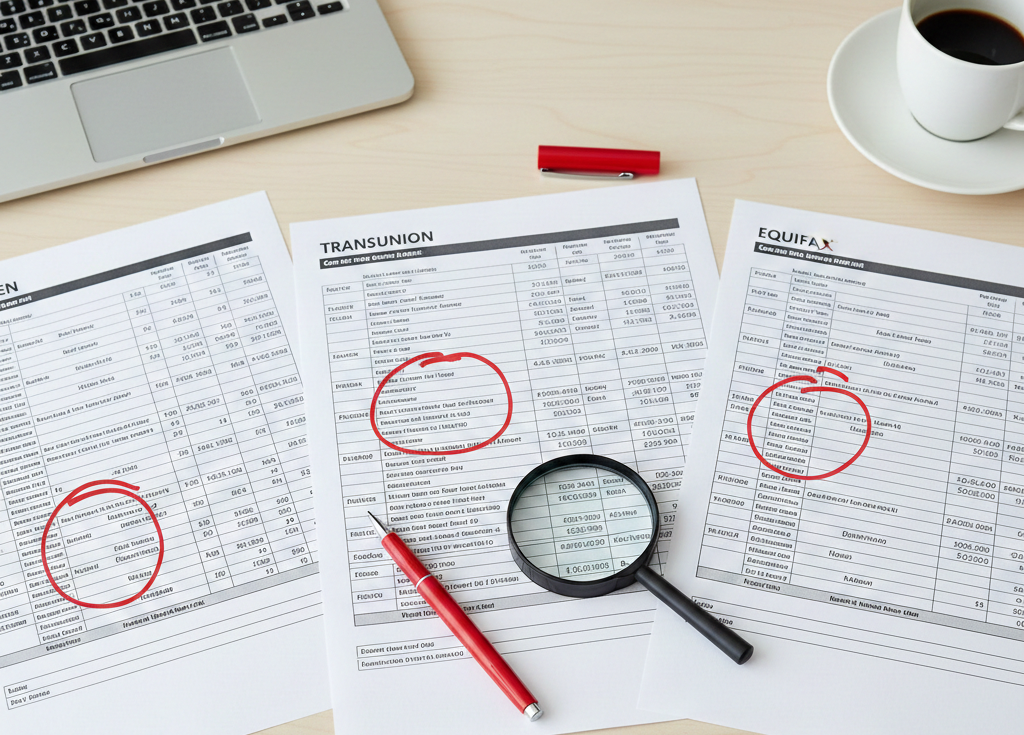
Always pull reports from all three bureaus for a complete and accurate diagnosis.
Start with the basics: your name, addresses, and employers. Errors here can lead to someone else's accounts being mixed with yours.
This section gives you a quick snapshot: total accounts, total balances, available credit, and any past-due accounts.
This is the heart of your report. Every loan and credit card is listed with its creditor, limit, balance, open date, and crucial month-by-month payment history.
Bankruptcies, court judgments, and collection accounts show up here and can do real damage.
Hard inquiries (when you apply for credit) can ding your score. Soft inquiries (like checking your own score) do not affect your score.
Check for consumer statements (notes you added), fraud alerts, or security freezes. These steps help keep your credit safer while you work on repairs.
Lay all three reports side by side. It’s normal to see some differences, but those gaps are important.
You've pulled and analyzed your reports. Now, move to the final step in the Diagnosis phase: using a targeted checklist to identify the exact, legal errors that qualify for dispute and removal.
Go to Step 3: Error Checklist & Dispute PrepDon't wait for errors to disappear. Get the **Ultimate Dispute Letter Kit** to start challenging items immediately after finding them in your report.
Download FREE Dispute Templates